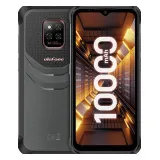
- android.gs
- Compare
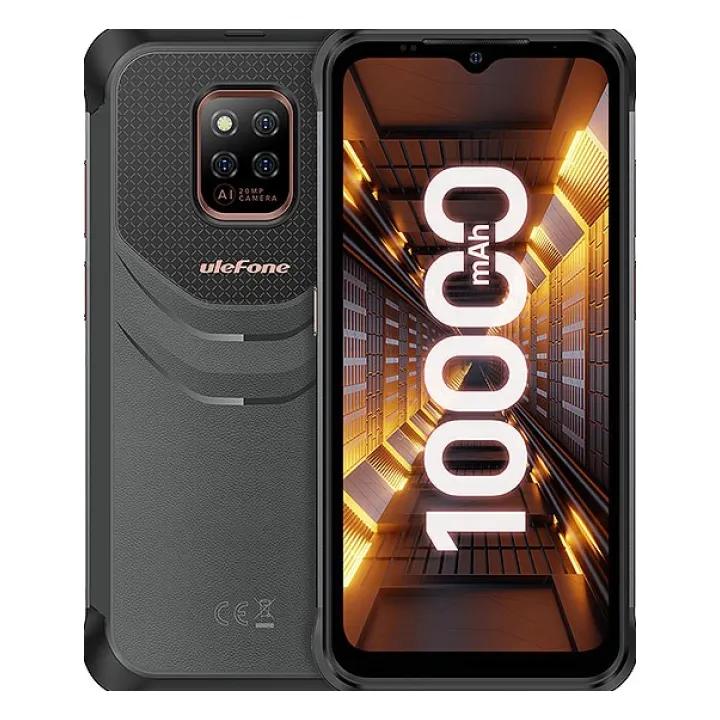
- Narzo 50 Pro vs Power Armor 14 Pro
Realme Narzo 50 Pro vs UleFone Power Armor 14 Pro
What Narzo 50 Pro does better (17) and where Power Armor 14 Pro wins (4) — every spec side by side.
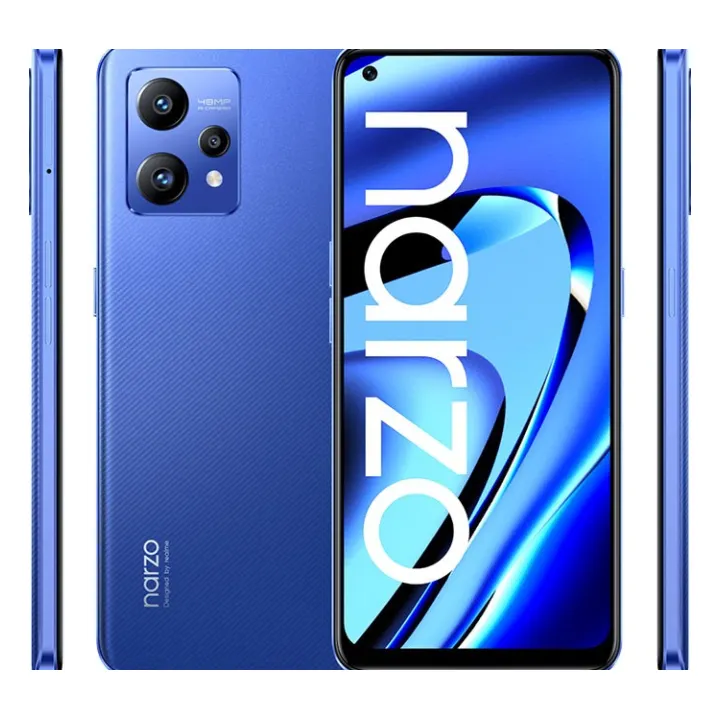
vs
7.2Display3.2
6.0Camera4.3
6.0Battery8.0
6.6Features6.0
Dimensions
Size comparison
Narzo 50 ProPower Armor 14 Pro
| Narzo 50 Pro | Power Armor 14 Pro | Difference | |
|---|---|---|---|
| Height | 160.2 mm | 175.6 mm | −15.4 mm |
| Width | 73.3 mm | 82.5 mm | −9.2 mm |
| Thickness | 8 mm | 17.2 mm | −9.2 mm |
| Weight | 181 g | 358 g | −177 g |
Drawn to the same scale from the official dimensions (front and side).
Why is Narzo 50 Pro better than Power Armor 14 Pro?
- Main camera48 MP vs 20 MP2.4×
- Wired charging33 W vs 18 W+83%
- Refresh rate90 Hz vs 60 Hz+50%
- OLED panelYes · Power Armor 14 Pro: No
- 5GYes · Power Armor 14 Pro: No
- Stereo speakersYes · Power Armor 14 Pro: No
- Weight181 g vs 358 g+98%
- Pixel density411 ppi vs 269 ppi+53%
- Thickness8 mm vs 17.2 mm2.2×
- CPU frequency2.5 GHz vs 2 GHz+25%
- Process6 nm vs 12 nm2×
- Rear cameras2 vs 12×
Why is Power Armor 14 Pro better than Narzo 50 Pro?
- Battery capacity5,000 mAh vs 10,000 mAh2×
- Wireless chargingNo · Narzo 50 Pro: Yes
- NFCNo · Narzo 50 Pro: Yes
- Memory card slotNo · Narzo 50 Pro: Yes
Specifications
Side by side
| Design | ||
| Weight | 181 g | 358 g |
| Thickness | 8 mm | 17.2 mm |
| Height | 160.2 mm | 175.6 mm |
| Width | 73.3 mm | 82.5 mm |
| Ingress protection | — | IP68 |
| Water resistance (IPx) | — | IPx8 |
| Glass protection | Corning Gorilla Glass 5 | Corning Gorilla Glass 3 |
| Colours | Hyper Blue, Hyper Black | Black |
| Display | ||
| Screen size | 6.4″ | 6.5″ |
| Panel | Super AMOLED | IPS LCD |
| OLED panel | Yes | No |
| Resolution (width) | 1,080 px | 720 px |
| Resolution (height) | 2,400 px | 1,600 px |
| Pixel density | 411 ppi | 269 ppi |
| Refresh rate | 90 Hz | 60 Hz |
| Screen-to-body ratio | 84.2% | 70.8% |
| Performance | ||
| Chipset | Mediatek Dimensity 920 | Mediatek MT6769Z Helio G85 |
| Chip maker | MediaTek | MediaTek |
| Process | 6 nm | 12 nm |
| CPU cores | 8 | 8 |
| CPU frequency | 2.5 GHz | 2 GHz |
| GPU | Mali-G68 MC4 | Mali-G52 MC2 |
| Memory | ||
| RAM | 8 GB | 8 GB |
| Storage (max) | 128 GB | 128 GB |
| Storage (base) | 128 GB | 128 GB |
| Storage type | UFS 2.2 | eMMC 5.1 |
| Memory card slot | No | Yes |
| Camera | ||
| Main camera | 48 MP | 20 MP |
| Main camera aperture | f/1.8 | f/1.8 |
| Main sensor size | 1/2.0" | 1/2.78" |
| Rear cameras | 2 | 1 |
| Optical stabilisation | No | No |
| Ultra-wide camera | Yes | No |
| Telephoto camera | No | No |
| Max video | 1080p | 1080p |
| Selfie camera | 16 MP | 16 MP |
| 4K selfie video | No | No |
| Battery | ||
| Battery capacity | 5,000 mAh | 10,000 mAh |
| Battery type | — | Li-Po |
| Wired charging | 33 W | 18 W |
| Charged in 30 min | 48% | — |
| Wireless charging | No | Yes |
| Wireless charging power | — | 15 W |
| Connectivity | ||
| 5G | Yes | No |
| eSIM | No | No |
| Dual SIM | Yes | Yes |
| Wi-Fi standard | Wi-Fi 6 | Wi-Fi 5 |
| Bluetooth | 5.2 | 5 |
| NFC | No | Yes |
| USB | USB Type-C 2.0 | USB Type-C 2.0 |
| USB version | 2 | 2 |
| Satellite navigation | GLONASS, BDS | GLONASS, GALILEO, BDS |
| Features | ||
| Stereo speakers | Yes | No |
| 3.5 mm headphone jack | Yes | Yes |
| Fingerprint sensor | Under display | Side |
| Sensors | Fingerprint (under display, optical), accelerometer, gyro, proximity, compass | Fingerprint (side-mounted), accelerometer, proximity, compass |
| Software | ||
| OS at launch | Android 12 | Android 12 |
| Platform | Android | Android |
| Interface | realme UI 3 | — |