- android.gs
- Compare
- Galaxy S23 Ultra vs Redmi Note 7
Samsung Galaxy S23 Ultra vs Xiaomi Redmi Note 7
What Galaxy S23 Ultra does better (29) and where Redmi Note 7 wins (6) — every spec side by side.
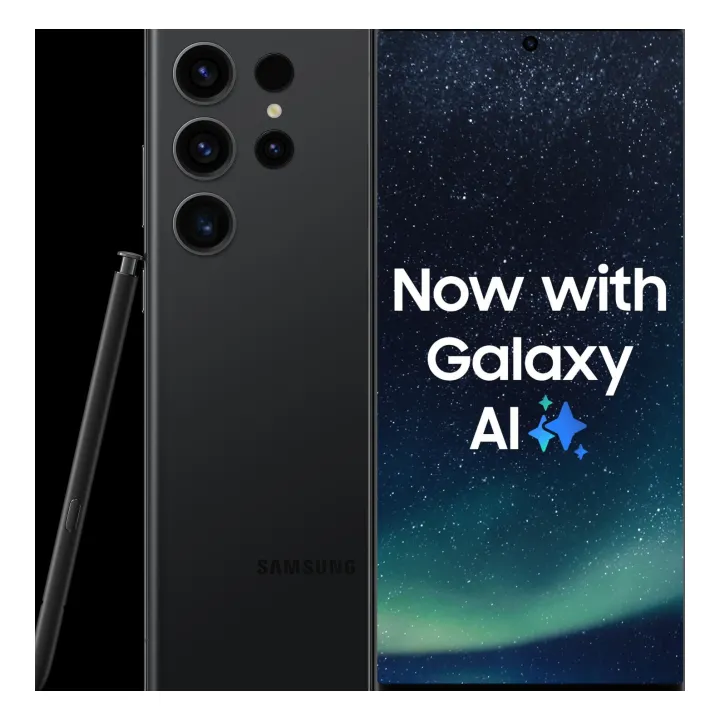
vs

9.2Display4.4
8.1Performance3.4
9.8Camera4.3
6.6Battery3.0
9.4Features4.0
Dimensions
Size comparison
Galaxy S23 UltraRedmi Note 7
| Galaxy S23 Ultra | Redmi Note 7 | Difference | |
|---|---|---|---|
| Height | 163.4 mm | 159.2 mm | +4.2 mm |
| Width | 78.1 mm | 75.2 mm | +2.9 mm |
| Thickness | 8.9 mm | 8.1 mm | +0.8 mm |
| Weight | 234 g | 186 g | +48 g |
Drawn to the same scale from the official dimensions (front and side).
Why is Galaxy S23 Ultra better than Redmi Note 7?
- AnTuTu score1,241,531 vs 139,0758.9×
- Main camera200 MP vs 48 MP4.2×
- Wired charging45 W vs 18 W2.5×
- Refresh rate120 Hz vs 60 Hz2×
- RAM12 GB vs 6 GB2×
- Storage (max)1,024 GB vs 128 GB8×
- Battery capacity5,000 mAh vs 4,000 mAh+25%
- OLED panelYes · Redmi Note 7: No
- Optical stabilisationYes · Redmi Note 7: No
- Telephoto cameraYes · Redmi Note 7: No
- Wireless chargingYes · Redmi Note 7: No
- NFCYes · Redmi Note 7: No
Why is Redmi Note 7 better than Galaxy S23 Ultra?
- Geekbench 6 (multi-core)4,927 vs 5,411+10%
- Weight234 g vs 186 g+26%
- Memory card slotNo · Galaxy S23 Ultra: Yes
- 3.5 mm headphone jackNo · Galaxy S23 Ultra: Yes
- Thickness8.9 mm vs 8.1 mm+10%
- Selfie camera12 MP vs 13 MP+8%
Specifications
Side by side
| Design | ||
| Weight | 234 g | 186 g |
| Thickness | 8.9 mm | 8.1 mm |
| Height | 163.4 mm | 159.2 mm |
| Width | 78.1 mm | 75.2 mm |
| Frame | Aluminium | Plastic |
| Back | Glass | Glass |
| Ingress protection | IP68 | — |
| Water resistance (IPx) | IPx8 | — |
| Glass protection | Corning Gorilla Glass Victus 2 | Corning Gorilla Glass 5 |
| Colours | Phantom Black, Green, Cream, Lavender, Graphite, Sky Blue, Lime, Red, BMW M Edition | Blue, Black, Twilight Gold, White |
| Stylus | Yes | — |
| Display | ||
| Screen size | 6.8″ | 6.3″ |
| Panel | Dynamic AMOLED 2X | IPS LCD |
| OLED panel | Yes | No |
| Resolution (width) | 1,440 px | 1,080 px |
| Resolution (height) | 3,088 px | 2,340 px |
| Pixel density | 500 ppi | 409 ppi |
| Refresh rate | 120 Hz | 60 Hz |
| Peak brightness | 1,750 nits | — |
| Measured brightness | 1,274 nits | — |
| Screen-to-body ratio | 89.9% | 81.4% |
| HDR | Yes | — |
| Performance | ||
| Chipset | Qualcomm SM8550-AC Snapdragon 8 Gen 2 | Qualcomm SDM660 Snapdragon 660 |
| Chip maker | Qualcomm | Qualcomm |
| Process | 4 nm | 14 nm |
| CPU cores | 8 | 8 |
| CPU frequency | 3.36 GHz | 2.2 GHz |
| GPU | Adreno 740 | Adreno 512 |
| AnTuTu score | 1,241,531 | 139,075 |
| Geekbench 6 (multi-core) | 4,927 | 5,411 |
| 3DMark Wild Life Extreme | 3,790 | — |
| Memory | ||
| RAM | 12 GB | 6 GB |
| Storage (max) | 1,024 GB | 128 GB |
| Storage (base) | 256 GB | 32 GB |
| Storage type | UFS 4.0 | eMMC 5.1 |
| Memory card slot | No | Yes |
| Camera | ||
| Main camera | 200 MP | 48 MP |
| Main camera aperture | f/1.7 | f/1.8 |
| Main sensor size | 1/1.3" | 1/2.0" |
| Rear cameras | 4 | 2 |
| Optical stabilisation | Yes | No |
| Ultra-wide camera | Yes | No |
| Telephoto camera | Yes | No |
| Optical zoom | 10× | — |
| Max video | 8K | 1080p |
| 4K video frame rate | 60 fps | — |
| Selfie camera | 12 MP | 13 MP |
| 4K selfie video | Yes | No |
| Battery | ||
| Battery capacity | 5,000 mAh | 4,000 mAh |
| Battery type | Li-Ion | Li-Po |
| Active use (test) | 13.4 h | — |
| Wired charging | 45 W | 18 W |
| Charged in 30 min | 65% | — |
| Wireless charging | Yes | No |
| Wireless charging power | 15 W | — |
| Reverse wireless charging | Yes | — |
| Connectivity | ||
| 5G | Yes | — |
| eSIM | Yes | No |
| Dual SIM | Yes | Yes |
| Wi-Fi standard | Wi-Fi 6E | Wi-Fi 5 |
| Bluetooth | 5.3 | 5 |
| NFC | Yes | No |
| USB | USB Type-C 3.2 | USB Type-C 2.0 |
| USB version | 3.2 | 2 |
| Video output | Yes | — |
| Ultra Wideband | Yes | — |
| Satellite navigation | GLONASS, GALILEO, BDS, QZSS | GLONASS, BDS |
| Features | ||
| Stereo speakers | Yes | No |
| 3.5 mm headphone jack | No | Yes |
| Loudspeaker loudness | -25.6 LUFS | — |
| Fingerprint sensor | Under display, ultrasonic | Rear |
| Barometer | Yes | — |
| Sensors | Fingerprint (under display, ultrasonic), accelerometer, gyro, proximity, compass, barometer | Fingerprint (rear-mounted), accelerometer, gyro, proximity, compass |
| SAR (head) | 0.96 W/kg | 0.59 W/kg |
| SAR body (ANFR test) | 1.29 W/kg | 1.03 W/kg |
| SAR body test distance (ANFR) | 5 mm | 5 mm |
| SAR limbs (ANFR test) | 3.15 W/kg | — |
| Passed ANFR SAR check | Yes | Yes |
| ANFR SAR check (year) | 2023 | 2019 |
| Software | ||
| OS at launch | Android 13 | Android 9.0 (Pie) |
| Platform | Android | Android |
| Interface | One UI 9.0 | MIUI 12 |
| Major OS updates promised | 4 | — |

Related comparisons
 vs
 Samsung Galaxy S23 UltravsSamsung Galaxy S24 Ultra9.29.4
 vsSamsung Galaxy S25 UltravsSamsung Galaxy S23 Ultra9.59.2
 vsSamsung Galaxy A54vsSamsung Galaxy S23 Ultra7.79.2vs
 Samsung Galaxy S23 UltravsSamsung Galaxy S22 Ultra 5G9.29.3
 vsXiaomi 13T ProvsSamsung Galaxy S23 Ultra9.19.2vs
 Samsung Galaxy S23 UltravsXiaomi Poco F5 Pro9.29.0