- android.gs
- Compare
- Galaxy A8 Star (A9 Star) vs Aquos R2
Samsung Galaxy A8 Star (A9 Star) vs Sharp Aquos R2
What Galaxy A8 Star (A9 Star) does better (9) and where Aquos R2 wins (5) — every spec side by side.
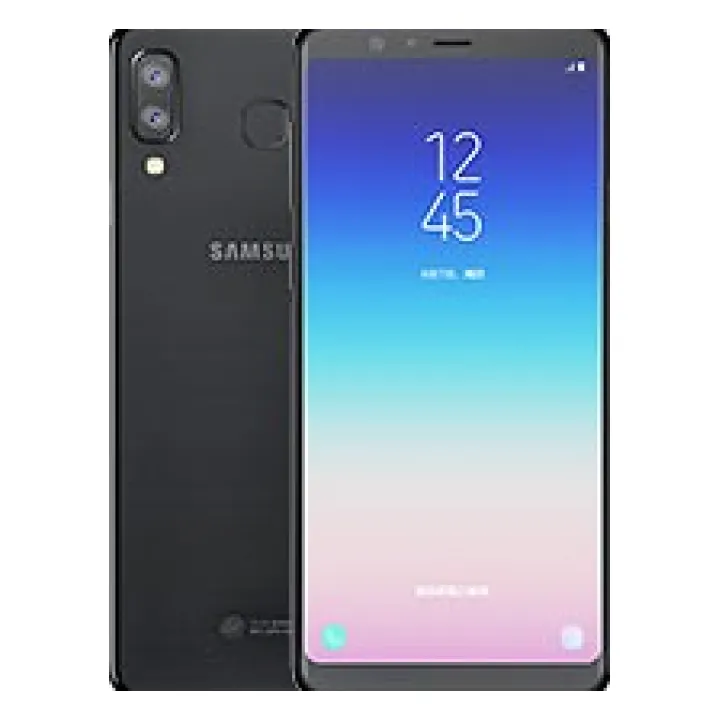
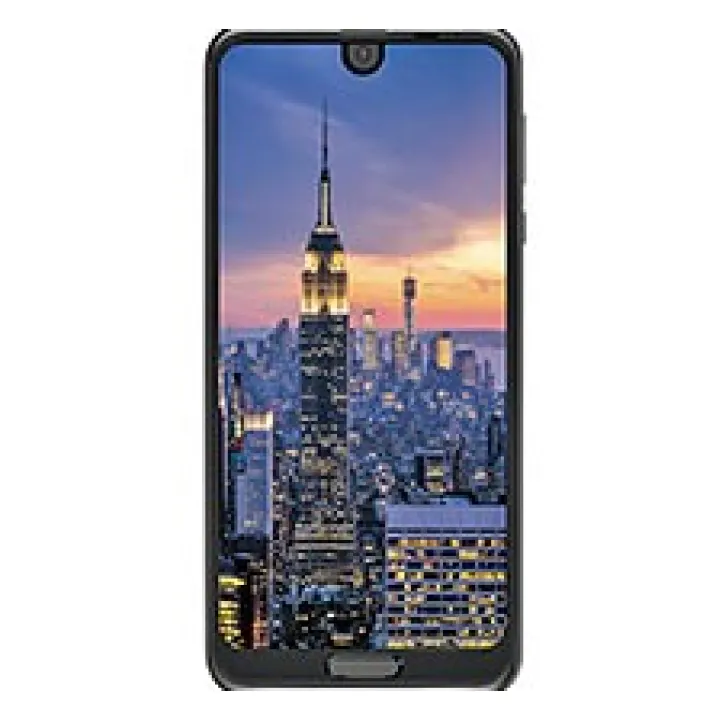
vs
5.7Display4.6
5.8Camera5.8
2.6Battery2.3
6.7Features6.7
Dimensions
Size comparison
Galaxy A8 Star (A9 Star)Aquos R2
| Galaxy A8 Star (A9 Star) | Aquos R2 | Difference | |
|---|---|---|---|
| Height | 162.4 mm | 156 mm | +6.4 mm |
| Width | 77 mm | 74 mm | +3 mm |
| Thickness | 7.6 mm | 9 mm | −1.4 mm |
| Weight | 191 g | 181 g | +10 g |
Drawn to the same scale from the official dimensions (front and side).
Why is Galaxy A8 Star (A9 Star) better than Aquos R2?
- RAM6 GB vs 4 GB+50%
- Wired charging15 W vs 10 W+50%
- OLED panelYes · Aquos R2: No
- Battery capacity3,700 mAh vs 3,130 mAh+18%
- Main camera24 MP vs 23 MP+6%
- Screen size6.3″ vs 6″+5%
- Selfie camera24 MP vs 16 MP+47%
- Thickness7.6 mm vs 9 mm+18%
- Screen-to-body ratio80.6% vs 77.8%+4%
Why is Aquos R2 better than Galaxy A8 Star (A9 Star)?
- Pixel density392 ppi vs 561 ppi+43%
- CPU frequency2.2 GHz vs 2.6 GHz+18%
- Weight191 g vs 181 g+6%
- Process14 nm vs 10 nm+40%
- Resolution (width)1,080 px vs 1,440 px+33%
Specifications
Side by side
| Design | ||
| Weight | 191 g | 181 g |
| Thickness | 7.6 mm | 9 mm |
| Height | 162.4 mm | 156 mm |
| Width | 77 mm | 74 mm |
| Frame | Aluminium | — |
| Back | Glass | — |
| Ingress protection | — | IP6X |
| Glass protection | Corning Gorilla Glass 5 | — |
| Colours | Black, White | Black, White |
| Display | ||
| Screen size | 6.3″ | 6″ |
| Panel | Super AMOLED | IGZO IPS LCD |
| OLED panel | Yes | No |
| Resolution (width) | 1,080 px | 1,440 px |
| Resolution (height) | 2,220 px | 3,040 px |
| Pixel density | 392 ppi | 561 ppi |
| Refresh rate | 60 Hz | 60 Hz |
| Screen-to-body ratio | 80.6% | 77.8% |
| Performance | ||
| Chipset | Qualcomm SDM660 Snapdragon 660 | Qualcomm SDM845 Snapdragon 845 |
| Chip maker | Qualcomm | Qualcomm |
| Process | 14 nm | 10 nm |
| CPU cores | 8 | 8 |
| CPU frequency | 2.2 GHz | 2.6 GHz |
| GPU | Adreno 512 | Adreno 630 |
| Memory | ||
| RAM | 6 GB | 4 GB |
| Storage (max) | 64 GB | 64 GB |
| Storage (base) | 64 GB | 64 GB |
| Storage type | eMMC 5.1 | — |
| Memory card slot | Yes | Yes |
| Camera | ||
| Main camera | 24 MP | 23 MP |
| Main camera aperture | f/1.7 | — |
| Main sensor size | 1/2.8" | — |
| Rear cameras | 2 | 2 |
| Optical stabilisation | No | No |
| Ultra-wide camera | No | No |
| Telephoto camera | No | No |
| Max video | 4K | 4K |
| 4K video frame rate | 30 fps | 30 fps |
| Selfie camera | 24 MP | 16 MP |
| 4K selfie video | No | — |
| Battery | ||
| Battery capacity | 3,700 mAh | 3,130 mAh |
| Battery type | Li-Ion | Li-Ion |
| Wired charging | 15 W | 10 W |
| Wireless charging | No | No |
| Connectivity | ||
| eSIM | No | No |
| Dual SIM | Yes | Yes |
| Wi-Fi standard | Wi-Fi 5 | Wi-Fi 5 |
| Bluetooth | 5 | 5 |
| NFC | Yes | Yes |
| USB | USB Type-C 2.0 | USB Type-C 2.0 |
| USB version | 2 | 2 |
| Satellite navigation | GLONASS, GALILEO, BDS | GLONASS |
| Features | ||
| Stereo speakers | No | No |
| 3.5 mm headphone jack | Yes | Yes |
| Fingerprint sensor | Rear | Front |
| Sensors | Fingerprint (rear-mounted), accelerometer, gyro, proximity, compass | Fingerprint (front-mounted), accelerometer, gyro, proximity, compass |
| SAR (head) | 0.43 W/kg | — |
| Software | ||
| OS at launch | Android 8.0 (Oreo) | Android 8.0 (Oreo) |
| Platform | Android | Android |
| Interface | One UI | — |
Related comparisons
 vs
 Xiaomi Pocophone F1vsSamsung Galaxy A8 Star (A9 Star)5.55.8
 vsHuawei P20vsSamsung Galaxy A8 Star (A9 Star)5.65.8
 vsNokia 8.1 (Nokia X7)vsSamsung Galaxy A8 Star (A9 Star)5.85.8
 vsHonor View 20vsSamsung Galaxy A8 Star (A9 Star)5.75.8
 vs
 Samsung Galaxy A7 (2018)vsSharp Aquos R25.35.2
 vsVivo V9vsSharp Aquos R25.25.2